
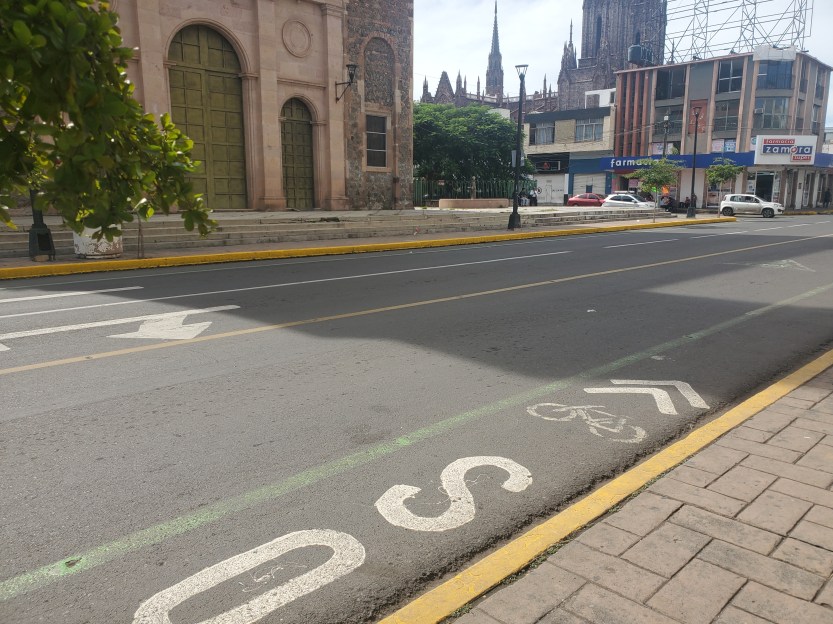
Most of the bigger cities have the wild inequality that is visible for all to see. Even though there are some slight efforts to reach out to the workers who make the city function, visitors can find the dividing lines, tourists are informed to steer clear of certain areas. Small cities are mostly given a pass, not only because people tend to prefer larger cities, but because it is usually hard to get to smaller areas. Zamora de Hidalgo, Michoacan is a smaller city, and its adjoined neighbor–Jacona, Michoacan–is even smaller, but coming in by bus, it is still evident that inequality remains an issue.


Between Jacona and Zamora, there is a beautiful pedestrian way that makes it easy for pedestrians and cyclists to commute between the two cities. Rarely is there a time when someone is not on that walkway. There are buses, but based on the small size of both cities, it makes more sense to walk or cycle wherever one is going. Coming into the city, there are no sidewalks for at least 3 kilometers, and the highway entrance is at the top of the hill–and yes, people were walking on the side of the highway. Also, one actually has to make it into the town before any street lights or ancillary businesses are visible.
Usually gated communities and country clubs would be reserved for suburbs in the United States, but these adjacent communities prove that feudalism can be practiced at any level. There are a number of “regular” residential areas, but sidewalks, public transportation, and entertainment are located close to the walkway in the center of town. Thanks to the rise of car culture, the city has expanded outward, and traffic has begun to increase. The fate of the suburbs of such small areas is up for anyone’s guess.
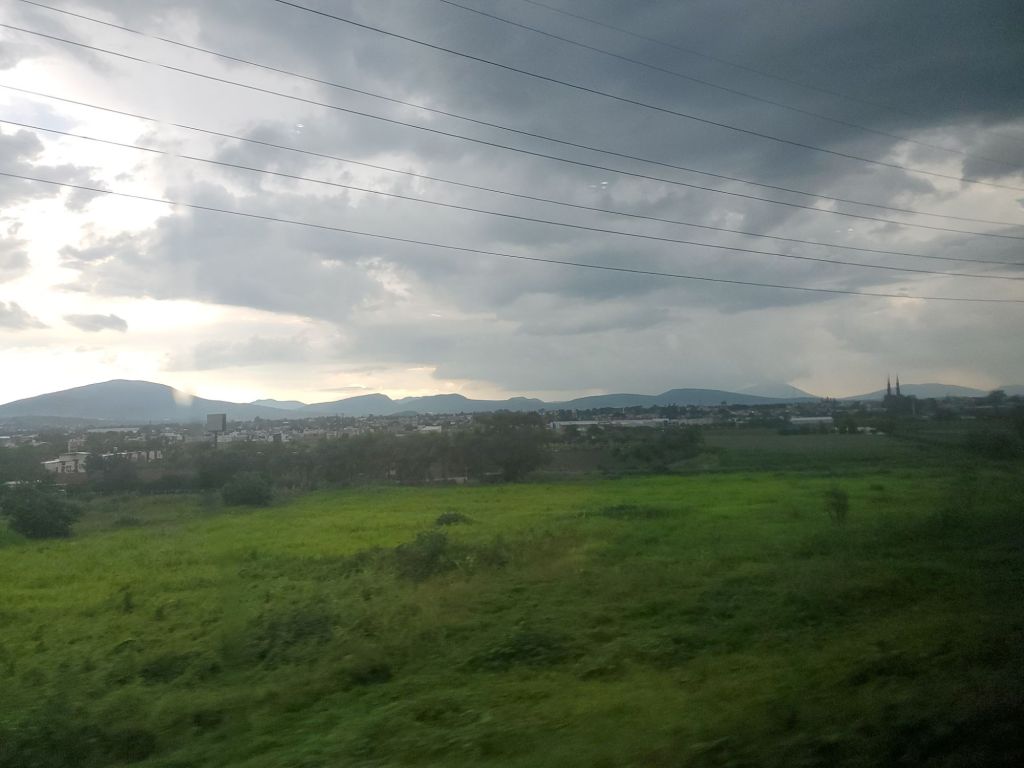
One of the reasons that people have traditionally preferred small towns is because everything seems relatively connected. Going into Zamora and Jacona, it is clear that even on a small scale, the workers of a city tend to live outside of it, while the decision-makers have much easier commutes. Climate change is going to determine who has further access to resources and whether any of these small towns have the capacity for change.
 Chasing A Dying Empire