
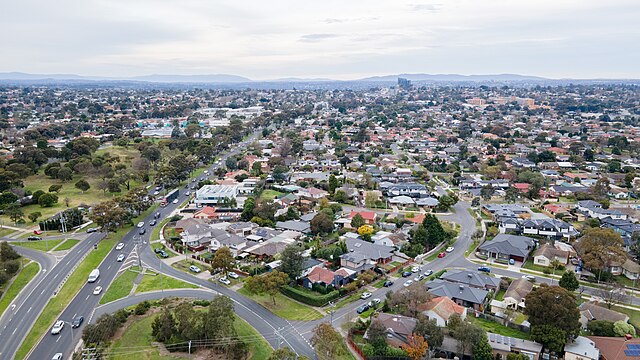
One of the biggest cons ever produced in the United States was the suburbs, and despite all the controversy, people are still buying into them today. Rather than accept that people will no longer be able to drive large cars from place to place, people are still selling the idea of a gorgeous house on a manicured lawn where children skip to school. Even without the history, this concept was insidious to community engagement, and people are finding out why as the empire falls. No one asked for this concept, and all suburbs have done is keep the residents at a disadvantage.
Consumption is easier to do when people are less connected to the people around them. This is one of the reasons why Amazon has been able to do so well during the rise of social media: people are more disconnected from each other than ever. However, the contentious competition baked into the psyche of the United States is still present despite the disconnection, and suburbs are designed to constrain each household into their own kingdoms. Thus, people are buying more based on their isolation, and when living in the suburbs, they cannot even have reference of what everyone else is doing even when they are neighbors, making trust impossible.
Additionally, many of the suburbs being built at this moment in time have homeowners’ associations. The concept of a homeowners’ association began with the neighborhood associations created to keep communities segregated. Because of this, suburbanites were conditioned to be suspicious of and control their neighborhoods, not engage with people and build rapport. Even as there are fewer comfortable people with money, suburbs create an isolationist mentality that affirms people’s right to be afraid of everyone outside of themselves. This control does not inspire people to unite together and fight tyrannical power.
Finally, suburbs are designed for information to flow into the community, but not so much out of it. The reason that so many people are prepared to call the police when they see someone new is because most of the information they receive is filtered. Even with public spaces, most people stay home because of the structure, so being in public and communicating is an obscure activity that most people avoid. Shopping, going to school, and even church are confined to location-car-location, so there is rarely any interaction because people are out of practice.
With the concept of suburbs being little islands, why were the lockdowns so terrifying to the point of outright defiance and violence? People who are used to being in control cannot handle delegating control to anyone else. Moreover, the choice to remain isolated based on the fantasy that one is safe is different from an edict clearly stating that certain activities are dangerous. Suburbs are, essentially, cauldrons of insecurities filled with scared, controlling consumers, and the idea that they cannot leave the prisons they made for themselves is unthinkable. Unity under any circumstances will never be as enticing as the control sought in the idea of a suburb.
All of these elements combined explain why people who exist in houses have a difficult, if not impossible, time organizing. Shut doors, anxious neighbors, hyperconsumption to prove things to people they ignore? Those are the prerequisites of creating suburbs in the first place, and fearful people have extreme difficulties conquering those fears to engage with problems. Those who live outside those boundaries tend to confront fears, and that is why suburbanites have even more fear of the people outside their homes.
 Chasing A Dying Empire