
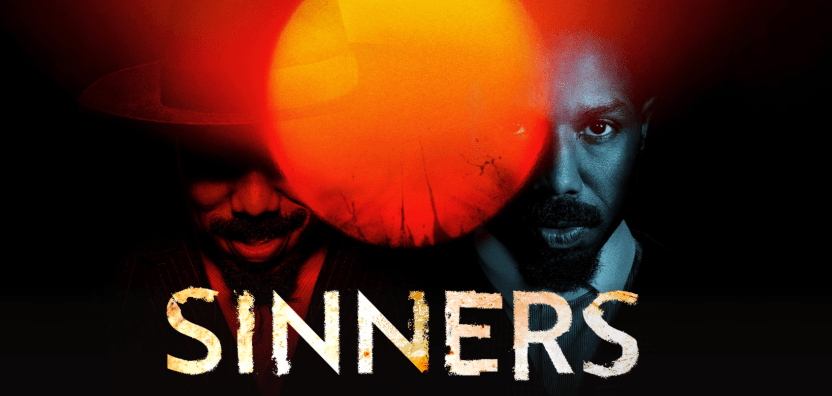
Everyone else reviewed the movie “Sinners” when it was fresh in theatres, but at that time, I was working after months of zero income, and was waiting for a full-time job to come from my resume. In celebration of my being able to work two jobs simultaneously, Lalo and I treated ourselves to streaming it, and there were so many metaphors that I felt like I was watching a better version of “Black Panther.” Just to be clear, there were several metaphors in “Black Panther,” but it still followed the Marvel formula of pro-wealth, and just because they were African does not make that any less the truth. However, “Sinners” had just the metaphors we needed for this year, and I can see why it made the impression that it did across the world.
One of the best lines by Stack in the film was about how Chicago was the same as the south with high-rise plantations. This pinpoints the reality that wherever Black people go in the United States, there is an expectation for us to be more and take less. Both of the twins were aspiring businessmen with a desire to help their community, which is directly where they returned when they “made” their money. However, people were more apt to use the twins for their own purposes instead of allowing them to rise on their own, and so the Smoke/Stack twins followed the illegitimate rules and left, rather than languish waiting for justice. Most Black people do not have the luxury of following their example, and more of us languish based on the premise that we have nothing to offer.
Naturally, the first thing that Black people with means did was work to uplift their community and everyone in it, which has been proven time and again with the Black experience. While other people are refusing to help people without the “proper criteria,” Black people are working to help people in need, even those who hurt us in the past because all we tend to see is need. One of the most beautiful scenes in the movie was the montage of how Club Juke was set up in a day, starting from the location and ending with the food. Only because they remained both connected to the community and held the memories of the right people in their hearts were they able to create unit so strong that a business really could be popped up in a day.
Finally, as a resident of a town that praises itself on being “liberal,” I truly appreciated how the vampires were not rich, wealthy conservatives, but the folks who claimed to be starting a group based on “love.” None of them were willing to relinquish their power, hear the word, “No,” or end their violence, but they were under the impression that having a white man in charge who talked about “love” was the same thing as creating unity. It was not surprising that the few remaining survivors never fell for that lie, because how could anyone believe that folks who condone the destruction of everything around them in the name of “love”? With two gold pieces, the original vampire destroyed pieces of a community that had existed for years, and in the end, there was nothing left to show for it.
There are plenty of different perspectives about the various characters, but I tend to focus on community as a whole because nothing happens in a vacuum, and people tend to make choices that relate to the choices of others. Seamlessly, “Sinners” took us through a scenario about how visions are destroyed by the dominant narrative, despite taking months of time to strategize and acquire resources. I think this is one of the main reasons that anyone who looks at the Black experience and has an “easy” answer truly knows nothing about the empire. Even with everything meticulously in place, someone is always looking to destroy it, forcing us to give up all that we worked for in exchange for dust.
 Chasing A Dying Empire