

At 45 years old, it will surprise no one that I have had coworkers with whom I never clicked, and one of them was while I worked for the state, another Black woman. She basically followed the status quo, and was promoted and given bonuses while I–after working overtime for the better part of two and a half years–had only received one bonus. Switching departments and offering compliance got her the income she finally needed to receive a mortgage to own a home, and she finally purchased a home–two hours away from work. Promoted, making enough money to manage both a mortgage and a commute, she had finally been granted the illusion of being middle class. Sadly, an elderly driver, who was also tired from not being able to retire, was not paying attention to the road, and the two of them were involved in a crash that neither of them survived.
Years ago, I had a friend, another Black woman, and she had lived three blocks from work in a house that was owned by an elderly Black woman who wanted to help the community. The house needed work, but it was a great house, and my friend had lived there with her cat and was able to actually save money. My friend had been trying to get promoted or a different job for years, but was able to afford to live downtown and close to her job without having to make much money for about six years. Then, the elderly lady was looking to sell, and my friend’s family warned her not to take the house because of the work that needed to be done, and my friend listened. Her family told her that it was “time” to buy a house, and she bought one that was about an hour away from her job with traffic. Once again, a tired commuter fell asleep and the cars were casualties of fatigue, only this time, my friend survived, but was never able to move the way she used to, even after 16 surgeries.
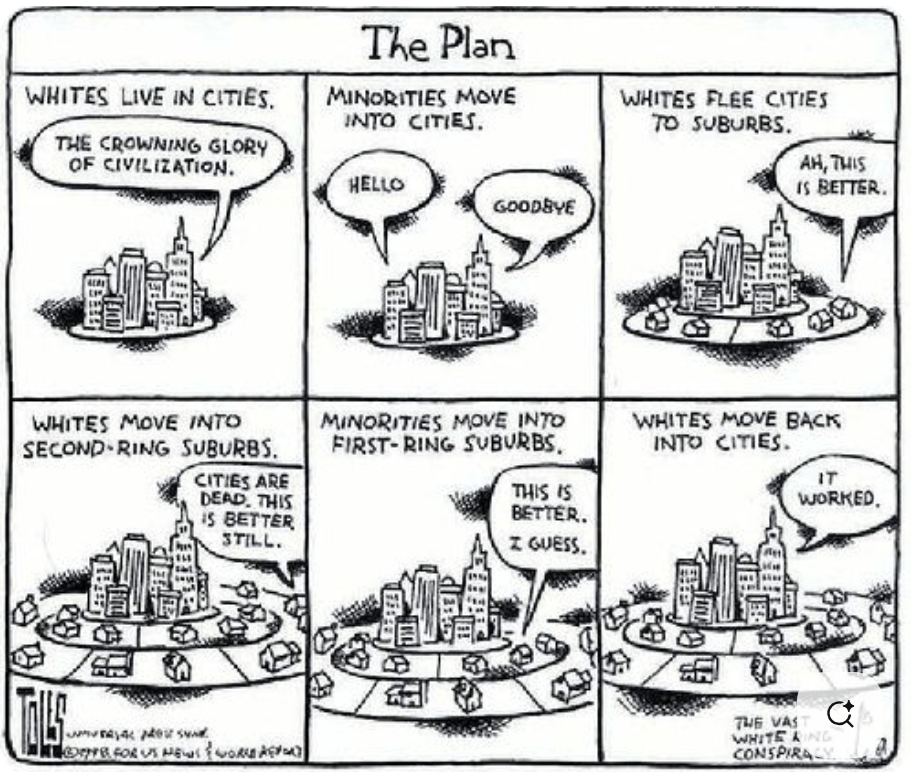
Because of segregation, Black people have always been asked to be away from beneficiaries and sycophants of the dominant narrative. Suburbs were originally for white people fleeing cities full of people they were “afraid” of, but as the cities became “trendy” again, certain suburbs were designated slums. All the displacement that began to happen was possible because marginalized populations were told that homeownership was the pinnacle of existence. Now, private equity firms are artificially inflating demand, and the working class is stuck navigating rapidly shrinking public transportation systems. This is proof that demanding that poorer homeowners move away is another justification for greed, and if people had left Black people alone, we would have been able to enjoy amenities without potentially sacrificing our lives.
Furthermore, putting poor people in the middle of nowhere makes it easier to rationalize a lack of infrastructure, such as sidewalks, public libraries, internet services, and even third spaces. Even though predominantly white people were able to successfully charge the government to make their spaces livable, Black people and others were neglected even when we were in the middle of all the action. If we move to areas without readily available infrastructure, we are setting ourselves up to bear the additional costs of life without resources. For some reason, we have continued to accept this as “reasonable,” even as the cost of living continues to increase, and people brag about living in the middle of nowhere while driving 2-3 hours. None of this should have been acceptable, but as long as people worship “houses,” such behavior continues.
Telling people that they have “nothing to show” for hard years of work is another way of saying that materialism justifies exploitation. Single-family zoning was created to exclude Black people, and every time we play into that game, we set ourselves up for disappointment, whether through highways or data centers. There is nothing wrong with houses, but putting mortgages and the real estate market on an undeserved pedestal has done immeasurable harm to the Black community, including the 2008 market crash. Ownership is a myth, community is not, and it is long past time to reckon with that reality.
 Chasing A Dying Empire