
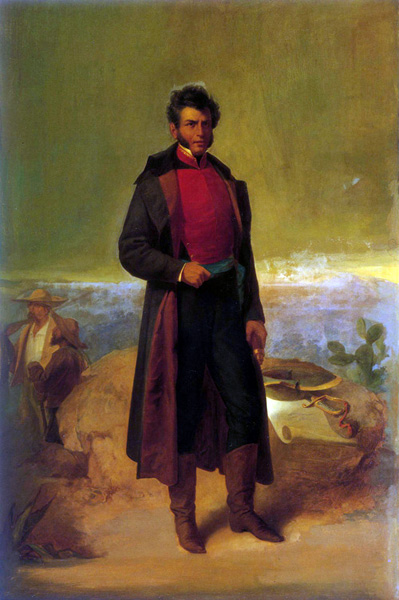
While far from perfect–as most nations generally are–Mexico has had a number of firsts before the United States. The Battle of the Alamo was fought so that Texans could maintain slavery because Mexico “ended” slavery first–even though Indigenous people would argue that fact and the colonial mindset of mejorar la raza remains. In 2024, Mexico elected the first woman president, which was challenging enough despite concessions made to the empire to keep Mexico intact. However, one of the more interesting facets of Mexican history is that they chose their first Black president as the second president of a newly formed nation, and he immediately declared the abolition of slavery. Continuing to read about him in the flare of historic embellishment has made several things clear to me regarding how the origins of a country are written and remembered.
The most important element of any “founding” historical figure is the need to believe that heroes are generally good people who are as appalled at what happens as we believe we would be at the time. For us, this qualifies as the reason they begin to go to war. In reality, I find that most people are spurred to action not individually, but because someone believes that placing certain people in power will be an advantage. Most people are susceptible to flattery, and very few are secure enough in themselves to consider the consequences of helping others move in a particular direction. Not having served, I feel that most people are “inspired” by the money or potential political career that could occur following time served.
Since most historical accounts are epics, the “heroes” are required to go through change regardless of access to privilege, meaning that they are not swayed by their wealth. Guerrero was born in a merchant family that was active in international trade, which meant that while he abhorred the taxes from Spain, he was already a man of privilege before the war. This is not unlike the story of Homero Gómez González, who was born into the logging industry before choosing to advocate against illegal logging; Ché Guevara, whose family had money before he went on his spiritual journey; and Fidel Castro, who would have been a rich individual had he not switched to communism. Again, it is essential to believe that wealth would not deter us from being devoted to a cause because the cause itself is part of the myth.
Finally, there is a need to detach from violence so that the past seems more clinical and less dangerous, which is why wars are always described as glorious instead of dangerous and evil. Individual acts are glossed over so that it seems noble that people are destroying “enemies” and expanding their territories. Veterans will tell anyone they meet that there is nothing “glorious” about war, and if they had the chance never to do it, they would take it. War history is the most important element of the dominant narrative because it teachers people to see the opposition as “other,” and therefore subhuman. Without the shine, war is mass murder, and nobody other than the merchants of wars believes otherwise.
I am still reading this account, and I am sure I will have many more opinions about the history before I am finished. What is pleasant is understanding that previous historical accounts bore more similarities than differences, which speaks to the human connections beyond borders. Currently, people are working to write different histories, and I hope that we will all find ourselves more nuanced as we progress.

